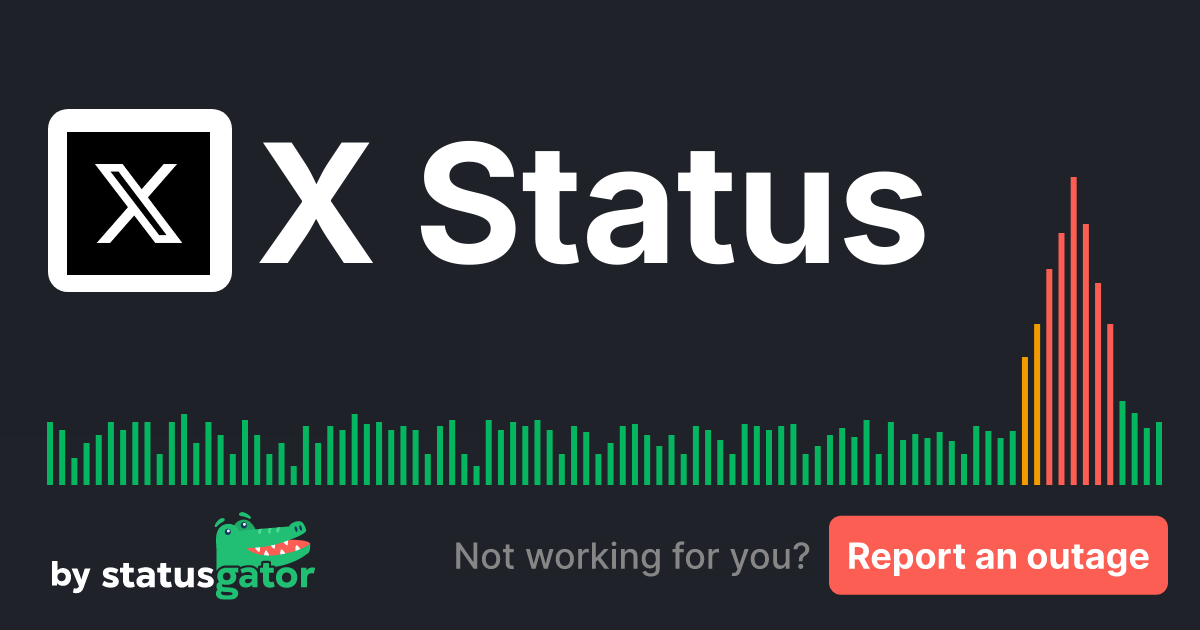
The Universal Question: "Is Twitter Down?" Why We Ask
Few online platforms are as integral to our daily lives, news consumption, and immediate communication as X, formerly known as Twitter. When the service falters, even for a few minutes, the ripple effect is immediate and widespread. From breaking news updates to connecting with communities, X serves as a vital digital town square. This is why the question, "Is Twitter Down?", often accompanied by frantic refreshes and checks on other devices, instantly becomes a common global query during any disruption.
For many, X is more than just a social media site; it’s a real-time information network, a customer service channel, and a hub for cultural discourse. An outage doesn't just mean missing out on memes; it can mean a delay in crucial information during emergencies, a communication breakdown for businesses, or a temporary silencing of collective voices. Understanding how these outages are monitored and what a service status truly signifies empowers users to better navigate these digital disruptions and know when to wait, and when to troubleshoot their own connection.
Beyond Refreshing: How Outages Are Monitored
When you find yourself unable to load your X feed, your first instinct might be to blame your own internet connection. However, a significant portion of outages stems from the platform's infrastructure itself. Monitoring X's status involves a sophisticated blend of automated system checks and, crucially, real-time user reports from around the globe. This dual approach provides a comprehensive view of service health, far beyond what any single server ping can offer.
Third-party status websites and network monitoring tools play a foundational role. They employ automated systems that continuously attempt to "ping" X's servers, checking for responsiveness and availability. If these automated pings fail, it can indicate a severe problem, such as a server being overloaded, a critical network issue preventing access, or scheduled maintenance in progress. These tools offer a quick, server-side perspective: is the website reachable at all?
However, for a platform as vast and complex as X, automated pings only tell part of the story. The true power of outage monitoring often lies in collective user reports. Services like NordVPN's status checker (as referenced in the context) utilize a dynamic, data-driven approach based entirely on user-submitted problem reports. This method is incredibly effective because it captures real-world user experience across diverse geographical locations and device types.
The Science Behind User-Reported Status
The user-report-driven monitoring system is remarkably intelligent. It doesn't just count raw reports; it contextualizes them. Here’s how it typically works:
1. **Baseline Calculation**: Every 30 minutes, the system calculates a "baseline." This baseline represents the average number of reports received for that specific 30-minute block over the past 24 hours. This is crucial because it accounts for natural fluctuations in user activity throughout the day. For example, the "normal" number of reports might be higher during peak evening hours than in the early morning.
2. **Thresholds for Status**: Once the baseline is established, specific thresholds are applied to determine the service status:
* **Online**: If the number of incoming user reports falls below 50% of the calculated baseline, the service is deemed "Online." This indicates that everything is functioning normally, with no significant issues affecting users.
* **Partial Outage**: Should the number of reports rise significantly, falling between 50% and 75% of the baseline, the service is classified as experiencing a "Partial outage." This status suggests that while X is largely operational, a noticeable segment of users is encountering problems, potentially with specific features, regions, or device types.
* **Down**: When the volume of user reports surges past 75% of the baseline, the service is considered "Down." This signifies a widespread, major disruption affecting a substantial portion of the user base, indicating significant issues or a full-scale outage.
This sophisticated method, updated every half-hour, provides a highly accurate and immediate reflection of X's operational status, directly from the perspective of its users. It allows for the detection of subtle, regional, or partial outages that server-side checks might miss, offering invaluable firsthand information on the extent of any problem. If you're looking for real-time information, checking a dedicated status page, like those discussed in
Is X (Twitter) Down? Check Live Status & Real-Time Reports, is your best bet.
Deciphering the Signs: What a "Partial Outage" Means
The term "partial outage" often causes confusion. It’s not an "all or nothing" scenario. A partial outage means X is not entirely inaccessible, but significant aspects of its functionality or reach are impaired. This can manifest in several ways:
* **Feature-Specific Issues**: Perhaps you can view your timeline but can't post tweets, or direct messages aren't sending. Media might fail to load, or search functionality could be unresponsive.
* **Regional Restrictions**: X might be fully operational in one country but inaccessible or severely degraded in another. The December 2024 incident where desktop users in Spain couldn't access X while mobile users could is a prime example of a regionally and device-specific partial outage.
* **Device or Browser Specificity**: As seen with the Spanish incident, sometimes issues are isolated to desktop browsers while mobile apps work fine, or vice-versa.
* **Intermittent Connectivity**: Users might experience frequent disconnections, slow loading times, or errors appearing sporadically rather than a complete block.
These nuanced issues are precisely what the "partial outage" status, triggered by 50-75% of the baseline report volume, aims to capture. It serves as an early warning system, indicating that while the entire ship isn't sinking, parts of it are struggling. For individual users, a partial outage can be particularly frustrating because typical troubleshooting steps like checking your internet might not reveal any problems on your end, leaving you wondering if it's "just me."
A Look Back: Notable X (Twitter) Outages and Their Lessons
X, like any massively scaled online service, is susceptible to various disruptions. Analyzing past incidents provides valuable insights into the common causes and diverse impacts of downtime. These historical events underscore the platform's global importance and the complexity of maintaining its uptime. A deeper dive into these incidents can be found in
X (Twitter) Outages: Decoding Past Incidents & Causes.
Here are some illustrative examples of reported incidents:
* **March 10, 2025 – 15-Hour Intermittent Outage**: Reported as a significant disruption, this incident was attributed by the platform's owner to a "massive cyberattack." This highlights the ever-present threat of malicious external forces attempting to disrupt services, demanding robust security measures.
* **December 9, 2024 – Unclear Duration**: This incident primarily affected desktop users in Spain, rendering X inaccessible via web browsers, even as mobile access remained unaffected. It illustrates how outages can be highly targeted, impacting specific regions or device types, rather than a global shutdown.
* **December 21, 2023 – 2-Hour Service Disruptions**: Reuters reported X experiencing significant issues across several key regions, including the US, UK, and France. This points to potential regional infrastructure failures or targeted issues affecting specific server clusters.
* **December 28, 2022 – 2-Hour Global Access Issues**: Thousands of users worldwide were unable to access the service. This was a more widespread outage, indicating issues at a core level that affected a broad user base globally.
Why Downtime Happens: Common Causes
The reasons behind X outages are varied and often complex, but typically fall into a few categories:
* **Server Overload**: Sudden spikes in traffic, often during major global events, can overwhelm servers, leading to slowdowns or crashes.
* **Network Problems**: Issues within X's vast network infrastructure, or problems with internet service providers connecting to X, can disrupt access.
* **Cyberattacks**: As seen in the reported March 2025 incident, malicious attacks (like DDoS - Distributed Denial of Service) can flood servers with traffic, making the service unavailable to legitimate users.
* **Software Bugs**: Errors in newly deployed code or existing software can lead to unexpected crashes or malfunctions.
* **Planned Maintenance**: Sometimes, outages are intentional and necessary for upgrades, security patches, or server maintenance. These are usually communicated in advance, but not always.
When an outage strikes, the best course of action is to check official X accounts (often accessible on other platforms or their status page if available), dedicated status monitoring websites, or even traditional news outlets, which often report on widespread outages. Patience is key, as most issues are resolved by X's technical teams.
Conclusion
The question "Is Twitter Down?" is more than just a passing thought; it reflects our reliance on X as a critical information and communication tool. Understanding how X's status is monitored, particularly through the sophisticated system of user reports and baseline analysis, demystifies the process for users. From immediate server pings to the granular data gathered from collective user experiences, a multi-faceted approach ensures that the true operational health of X is accurately reflected. While outages are an inevitable part of the digital landscape, armed with the knowledge of how they're detected and what the different statuses mean, users can better interpret the situation, find reliable information, and navigate the occasional silence in the digital town square.